
|
|
Scholastic Background (a lifetime in school):
|

Subject Matters.
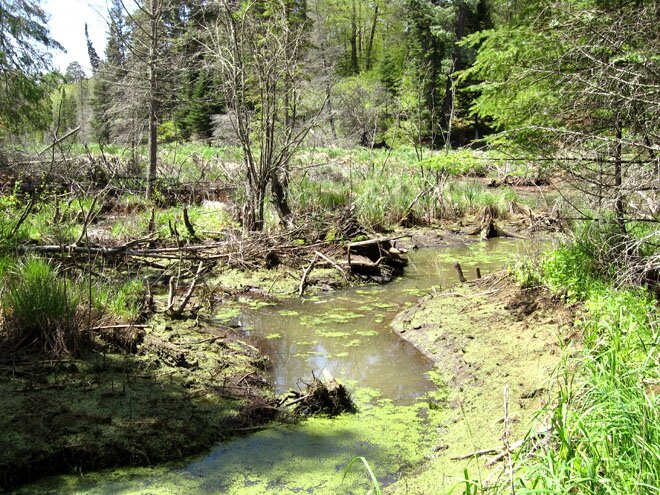
My real home is up in the hinterlands of Northwest Wisconsin: A genuine old-growth forest and partly navigable wetland which are occupied by a variety of forest and swamp creatures, some photos of which are below. Spare time at home is filled with experiencing the wonders of biology and geomorphology, occasionally hitting the road to obscure areas written about by the old, forgotten explorers. One such area comprises the ultimate headwaters of the Mississippi River that flow and seep into Lake Itasca which then funnels the water out to the Gulf of Mexico, occasionally causing pain and misery for thousands along the way. Why just do the slippery, skull-cracking walk across Itasca's outlet when you can seek out extreme sources such as Howard Creek whose head starts the longest perennial course of open water through the Mississippi River to the Gulf (except for the Missouri River and its tributaries, one must note at least parenthetically). Furthermore, Hell Roaring Creek does for the Missouri River what Howard Creek does for the Mississippi; click on the photos on the right. Lake Superior is good for all seasons as may be hinted at here, and there are a few weeks in many years that we can truck on over the ice road to Madeline Island as seen in this movie taken with my pocket-size dashcam. Sand Island once supported the northernmost community in Wisconsin and lately has become my favorite island of them all. Some photos from recent expeditions to study geographical features of Sand, Madeline, Outer, Devil's and Stockton Islands are on my Apostle Islands minisite. I still resent the fact that the Geography classes I've attended over the years were overloaded with political science and sociology without enough emphasis on landforms and waterways on which I've spent so much time recording for most of a century. Now retired from my job as a microbiology lab instructor, I visit my emeritus office on occasion and still manage a stock culture collection. I also find scheduling those road trips to be a bit easier than before. But with the un-fixable loss of its "winter legs" I had to put my Mitsubishi-built 2001 Dodge Stratus Coupe (the poor-man's Dodge Challenger) into semi-retirement in the fall of 2014. Ultimately I donated it to Minnesota Public Radio by which time it had achieved 436,814 miles while keeping up its shiny good looks, rust-resistance and great gas mileage, easily achieving over 40 mpg on the open road. Presently, my travel machine is a Chevrolet Captiva Sport SUV, an offshoot of the German Opel Antara which generated clones under various brand names over much of the world, including our 2008-10 Saturn Vue. The Captiva Sport was imported to the U.S. from Mexico in 2012-15 to fill a gap in the U.S. rental market, and thousands of lucky buyers were able to purchase the used vehicles and become happy owners as one can read here. The updated successor (which started out by looking a lot like the Captiva Sport) is built in China and sold to the U.S. as the Buick Envision. With some inspired writing, a reliable source of information about all the updating happens to be the Opel Antara page on Wikipedia. Having wound down my 137th and last semester (the 2014 Summer Session), some extended blather about my work-related activities and overall attitude can be found here. Subjects taught in Microbiology 102 at UW-Madison for many years are listed here. The subject certainly matters! There is a framework behind all this which one may not find in a lab manual. The overall theme of this course has been what bacterial cells do and how they fit into the scheme of things. What they look like is relatively insignificant, although one might think they really should be twice their size in order to account for all their doings!
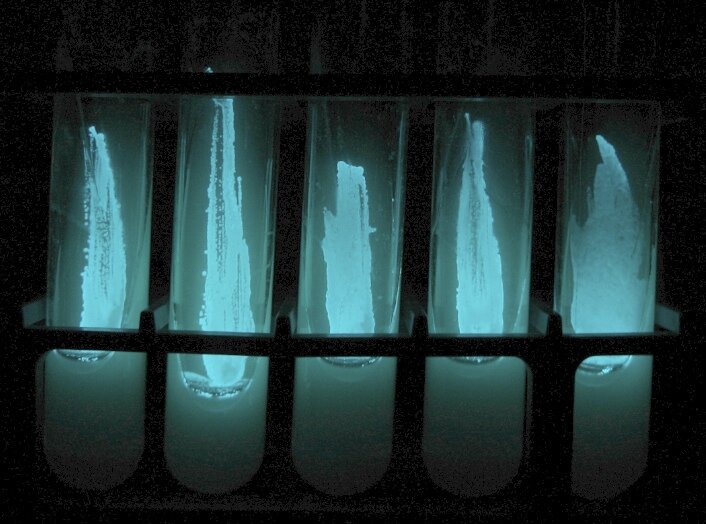
Occasionally I come across microbes that one doesn't consider in the usual bacteriology course. A couple examples: A colony of the green alga, Chlorella, turned up in a bacteriological plate-count analysis of water from the actual headwaters of the Mississippi River. After several years, it still maintains itself on slants of Nutrient Agar just like a bacterial culture. And it is always reasonably fun to isolate purple non-sulfur photosynthetic bacteria from rain, snow, icicles and hailstones and then see if any can produce hydrogen. Isolating and running tests on this type of photosynthetic bacteria became a special feature of our Microbiology 102 course. Wouldn't it be great if we could get them to use light energy to synthesize propane!
I grew up thinking I would wind up in a geography and cartography-related career (surveying, perhaps) but I got sidetracked by biology, and a couple college courses introduced me to the fascinating world of microbiology. Decades later, the thought of retirement from active teaching in bacteriology lab courses really had me down for quite awhile, and my very best friends were convinced that such would be a mistake. I'm too young for such nonscience, one would think. But from superficial appearances, I seem to be getting along with "giving up the job" OK. Actually, I do "get out more" and frequently indulge my aforementioned passion for the great outdoors. I haven't really retired from microbiology and will always maintain my interest in simplifying some of the basics of microbial science, continuing to put relevant things on-line and thereby continuing to do the teaching thing. As an example: How about the concept of "programming" selective-differential plating media to isolate pathogens of a certain physiological type? Isolation plating is still being done in clinical labs, as it isn't all DNA detection. In the isolation procedure for the fish (and human) pathogen Edwardsiella tarda, formulation of an efficient plating medium ("ET Agar") was fairly straightforward and found several advocates including this laboratory. I finally got my "ET Agar Page" on the web, and it can be accessed here. One of the medium's features is how it can differentiate three biogroups of E. tarda by colony size and color. Adding stuff to the web continues to be enjoyable. I am still doing HTML the old-fashioned way, building on what I taught myself back in 1997 when I discovered it was intuitive and easy. (Go to your browser's source viewer and check it out.) And I do not complicate matters by involving Cascading Style Sheets (CSS) and JavaScript. My favorite HTML-checking web browser helps to spot and remove errors. Pop-ups and advertisements do not intrude. And what you see on a web page is what you get when it comes out as a printout or PDF file; blank spaces are held as a minimum. So, a marketed HTML editor finds no place in my desert island emergency kit. Anyone can do it; just keep the code clean and modular. I still find old browsers from decades ago fascinating but, of course, would never go on-line with them, as their security on the internet is nil. I used to design web pages for the ancient state-of-the-art and speech-capable NCSA Mosaic 3.0beta4 browser. Here is the how it looked when displaying the Web's first Splammo page.
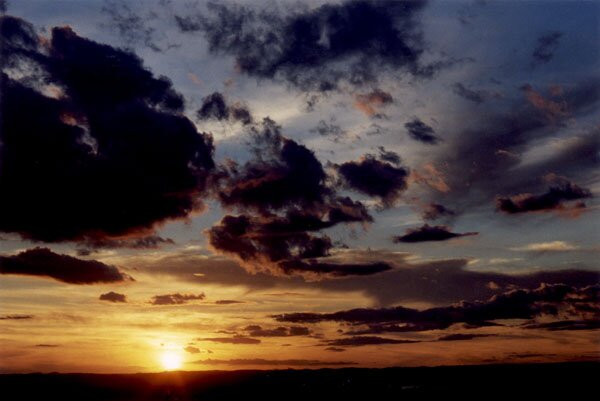
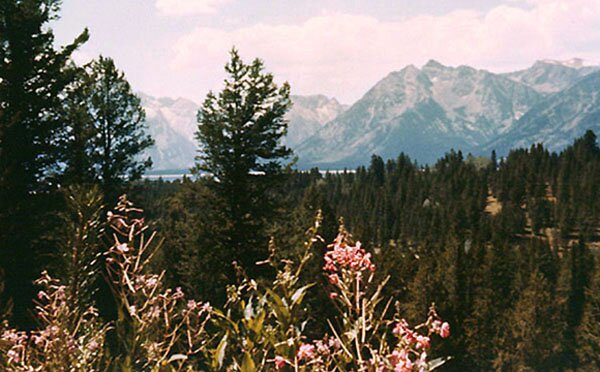
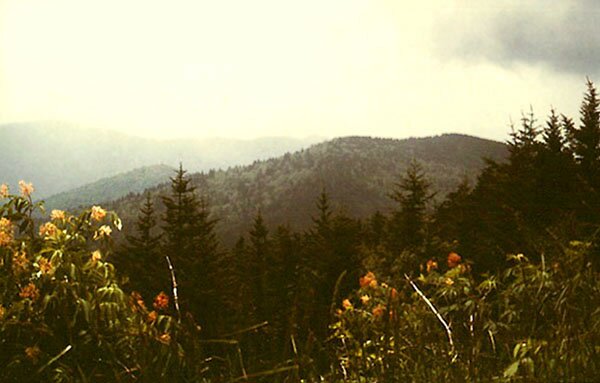
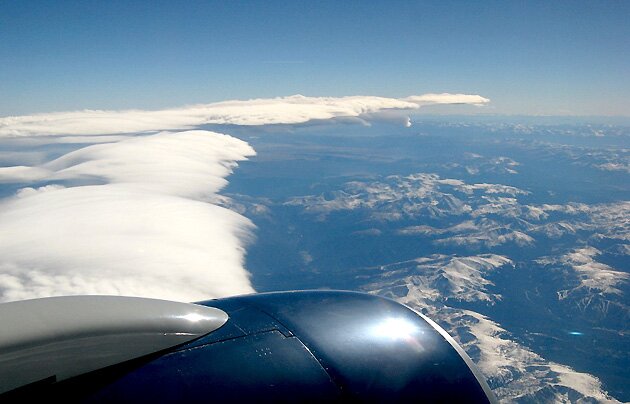
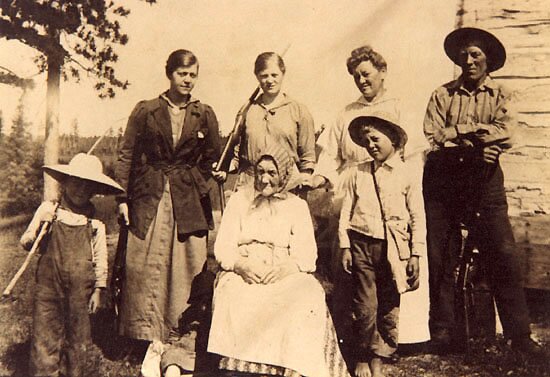
Where does the hardly-earned money go? Partly to fund badly-needed playtime and the escapes into the real world referenced above. Here are some more: Just to the right are three photos that were taken with real film (!) which show (1) a sunset taken from the top of Bell Mound near Black River Falls on Sept. 13, 2001 when dark clouds in general were no longer just on the horizon, (2) a view of Jackson Hole, Wyoming suitable for calendars and postcards that was taken in August, 1961 and (3) a similar view of the Smoky Mountains in North Carolina taken in May, 1975. The fourth image was taken with my digital camera out of the plane window in October, 2014 on my way to Eddie Cochran's 76th birthday commemoration (with cake!) in Bell Gardens, California. For awhile it seemed we were racing the clouds while over the mountains. A Little Bit of Family History:Click on the photo on the right which shows three generations (circa 1915) immediately preceding mine. Among the three kids in the front row, you see a future school principal and architect, a future farmer and heavy equipment mechanic, and a future aerospace engineer. In 1920, my grandfather Clarn (on the far right) built a barn on his farm near Hayward; as it stood in 2002 is shown here. In the 1920s, he sharpened the saws for the Schroeder logging operation on Outer Island, photos of which are found here. The older lady (front and center) is my great-grandmother, Anne. Once we found out her maiden name (and its correct spelling!), it became a breeze to trace our family back to the Folkung family group of 12th-century Sweden. As we went back in time with the help of Ancestry.com, we found several lines converging on family members ably depicted in the epic Swedish TV miniseries "ARN–The Knight Templar" – namely Birgir "Brosa" and his brother Magnus "Minnesköld" (both surnamed Bengtsson) and Magnus' son Eskil Magnusson. All three are shown in this order in a promotional photo for the TV series, the official trailer of which can be seen here. According to Wikipedia articles about Birgir, Magnus and Eskil, these individuals held administrative positions in the developing Scandinavian governing bodies, and Birgir Brosa went on to serve as advisor to the rebellious Birkebeiner party of early Norway with a general civil war breaking out immediately upon his death. After all of these generations over the centuries, I would bet that most individuals of Scandinavian descent can include the above-named gentlemen and a further historical ancestor, Björn "Ironside" Ragnarsson (whose fabled father was Ragnar "Lothbrok" Sigardsson), among their relatives. Inserting another bit of history: The much older Magnus – with his young, second wife (Ingrid Ylva, a "white witch") – became the father of Birger Jarl, the eventual founder of a unified Sweden. However, with the above-mentioned Swedish miniseries taking advantage of a belief that Magnus may have been entirely too old (if not deceased) to actually be the father, one of the functions of Magnus' fictional son "Arn" was to have a son (another "Magnus") who would eventually become the father of Birgir Jarl! Surf's Up!
|



Back to the Animal Farm:
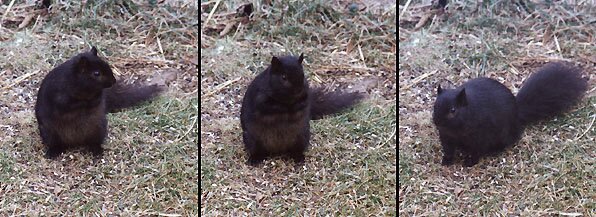
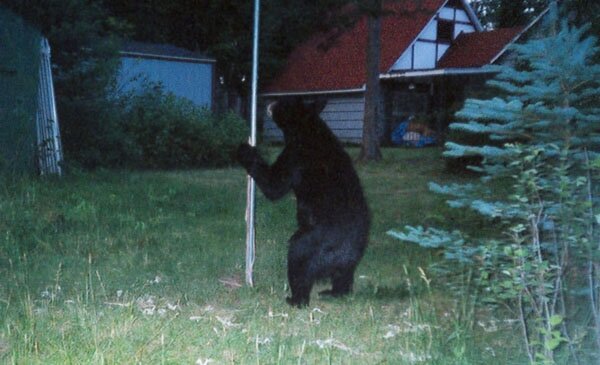
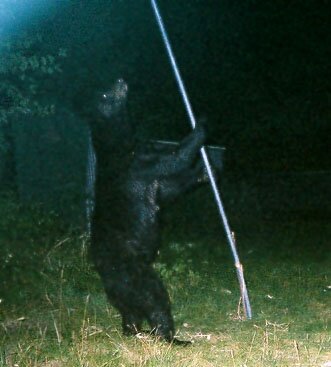
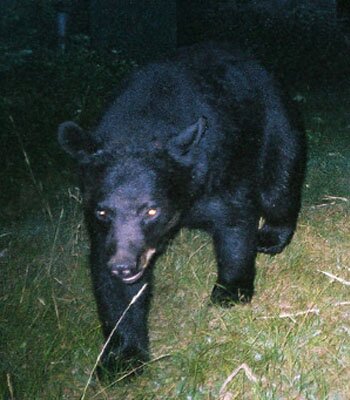
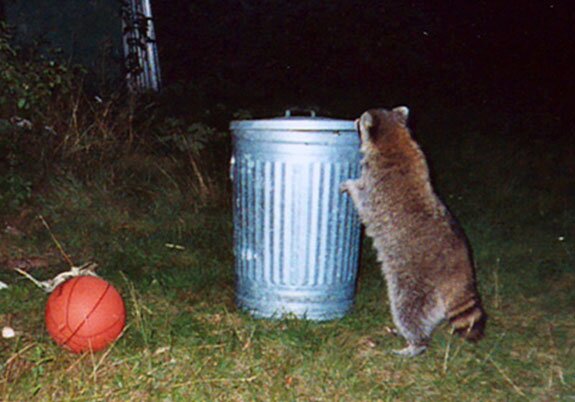
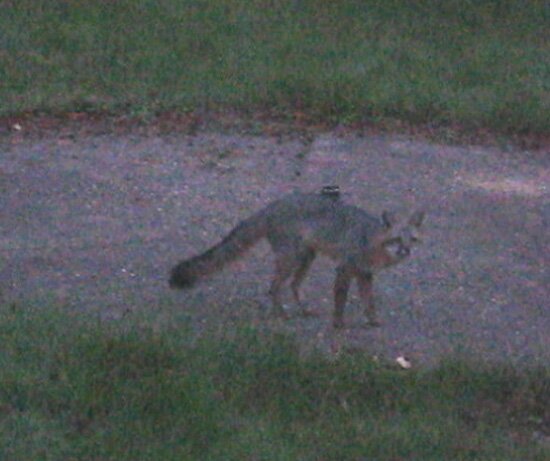
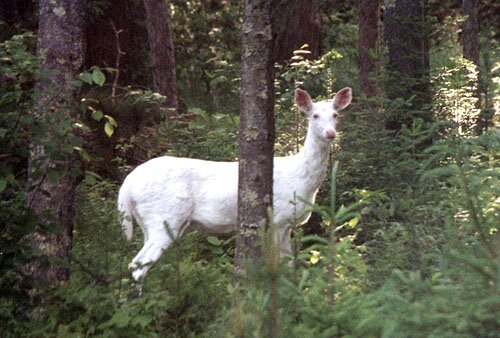
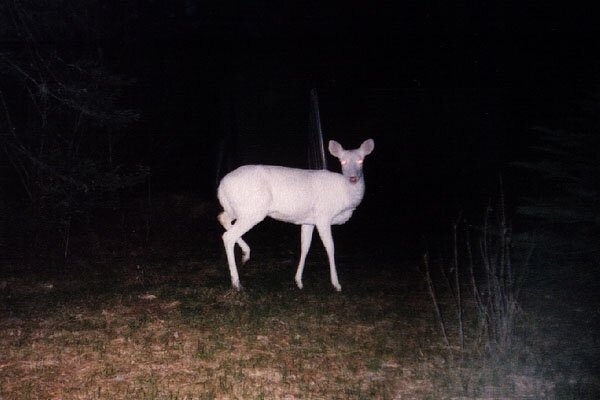
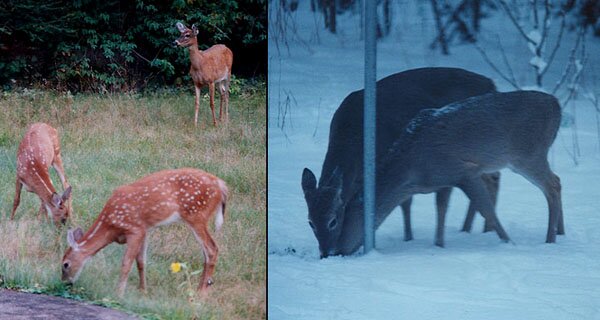
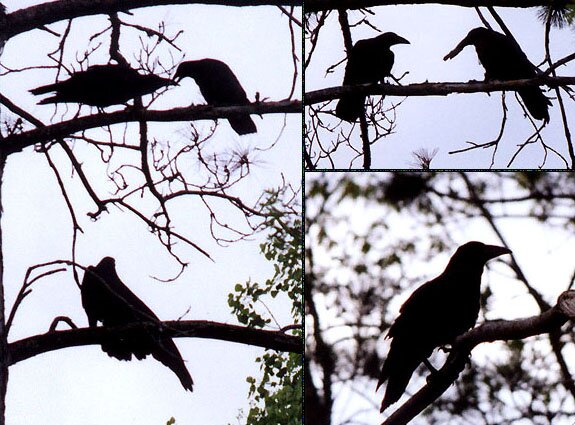
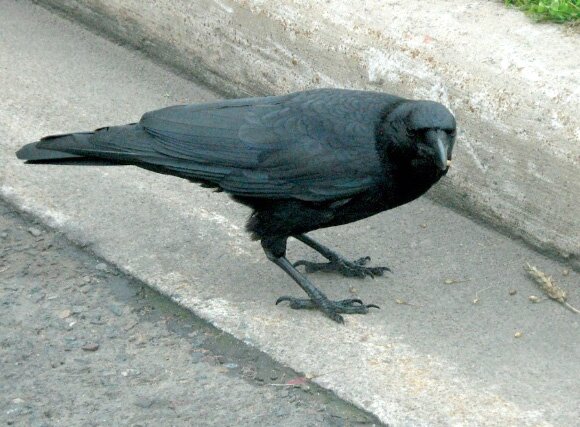
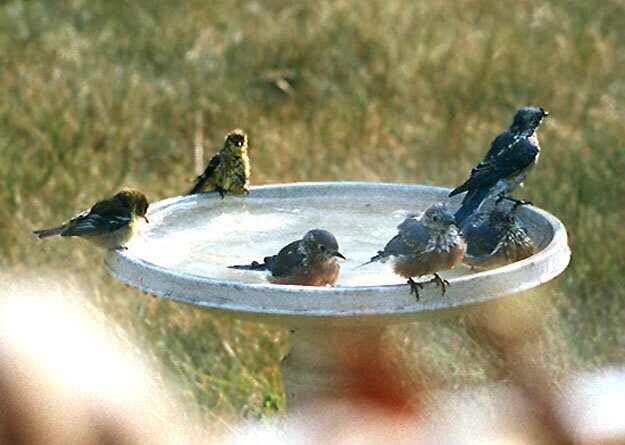
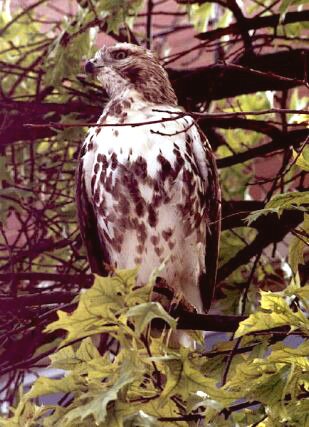
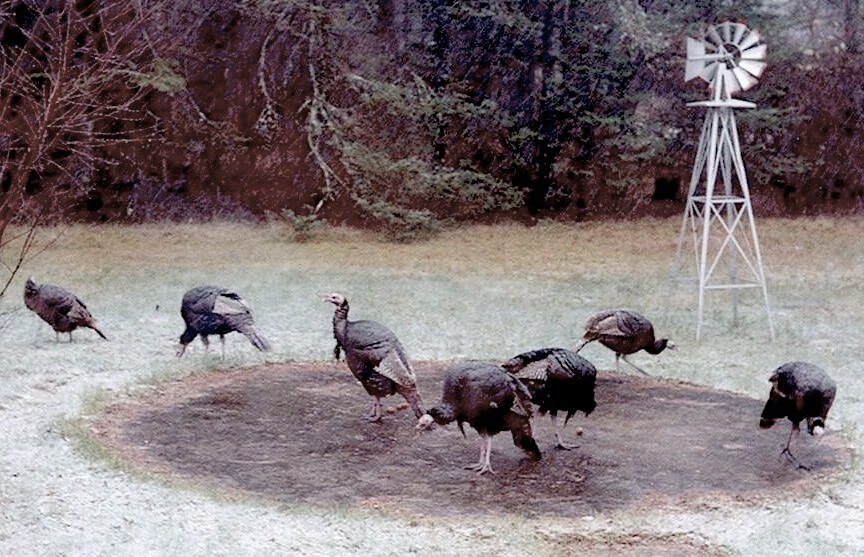
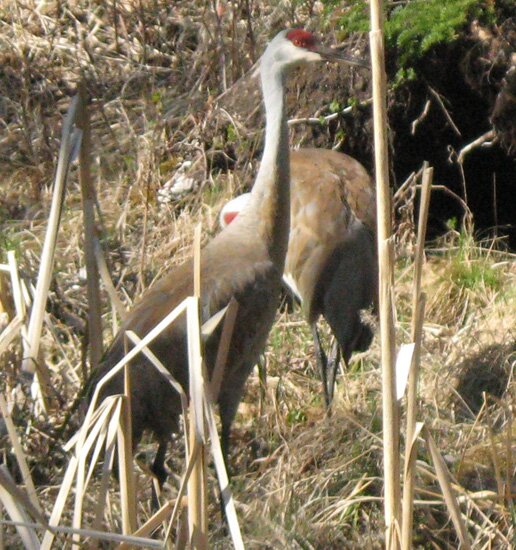
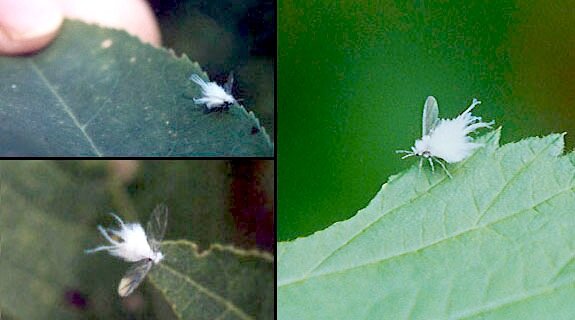
Up in my neck of the woods, various interesting animals have been observed including Domino the black squirrel who could chew through wood and plastic and destroy all kinds of "squirrel-proof" bird feeders, Little Ollie the good-natured teddy-bear type who was unjustly accused of taking down our feeders, and a big mama bear with triplets who got caught in the act performing a precision pulling operation to take the feeders down. Here she comes to examine the source of the flash, only to take a most unflattering self portrait. For photographing these shy creatures at night, I use a wide-angle camera with an automatic motion detector. Genuine forest animals – wise to the ways of the great outdoors! Bright, motivated, self-aware, professional, prosperous and innovative. A true joy to observe. For the truth about black bears and some great videos, go to bear.org where one can be entertained by some genuine bear-wrestling! Garbage cans have always been a natural attractant for animals. Here is Little Ollie down on one elbow scanning the bottom for the serial number, and here is one of our rather large raccoons. We also have plenty of foxes in our woods – both gray and red. An evening visit by a gray fox is shown in this photo taken through the kitchen window. Delighting all who saw her strolling through her domain was this genuine albino doe who appeared as big as a horse and was first seen in our woods in February 1999 prancing through the snow. A photogallery is shown here. A couple years later, she disappeared and a smaller albino doe showed up in her place, appearing more goat-like. She is caught here with the bear camera, and a couple photogalleries are shown here and here. She especially loved walnuts, and if presented with an apple and a similar-sized scoop of mashed potatoes, she would take the mashed potatoes every time and just sniff at the apple. We lost her as the result of a car accident in early November 2004. The "regular" kind of deer are all we have now, and they are still always interesting to watch. The ravens can put on a good show, sometimes spending a lot of time passing things real and imaginary from one to another. The crows outnumber the ravens at least twenty to one, and here is one beating the daylights out of a grass blossom in order to obtain a few seeds. Not too many days out of the egg, here are some very young birds at the communal bath trying to figure out their new world. We have seen bald eagles steadily increasing in numbers in recent years, and they have become especially frequent along roadsides, competing with the usual crows and turkey vultures in their "cleanup" of roadkill. Becoming more visible as carrion eaters does nothing for their traditional majestic image, one might think. While I was parked along a highway near some vultures taking apart a dead deer, a large bird which I initially thought was a juvenile goshawk flew in, scattering the vultures to the trees. From the photo, two bird experts confirmed it was a juvenile bald eagle from its belly feathers and humongous beak. I never thought of goshawks as carrion eaters anyway, but I suppose anything would be fair game if they were hungry enough. Red-tailed hawks are fairly frequent in our area, but this photo was actually taken on the University of Wisconsin-Madison campus in 1999. Quite familiar with masses of people, this individual was often seen playfully buzzing crowds and feeding on rabbits and rodents, disappearing upon hearing the approach of the dreaded crows. In late fall, groups of wild turkeys come through our yard and provide an interesting sight. This group actually showed up on a Thanksgiving Day! Not so common a sight are sandhill cranes which we were lucky to see casually stroll past our car while parked just off the road on Madeline Island. In the summer, we often see insects bouncing around like tiny blue balls of cotton – traveling in a small pack, flying skillfully against the wind and landing preferentially on raspberry and black cherry leaves. When we first noticed them in our back yard in the 1980s, we decided they shall be called fuzzy blue cherry gnats, and I searched the literature in vain for their true identification. Lately an increasing number of photos and descriptions of such insects have been showing up on the web, so what we have here is one of many species of wooly aphids. My Mom loved sitting by the picture window and watching the animals emerge from the woods. Here is her photo of twin bear cubs resting in the back yard. |


|
Life is far more important than what you do for a living. This homepage invaded the World Wide Web on January 28, 1997 and found sanctuary with associated pages on .com and .net domains circa 2001. Latest update was on January 26, 2021 at 8:45 PM, CST which can make this the Twenty-Fourth Anniversary Edition. You must let me know if any quote or image on these pages is improperly credited. All photos are by myself unless they are credited otherwise or are obviously ancient archive photos such as this one. Bacteriological Email: lindquis @ bact.wisc.edu Here is the 10-day Weather Forecast for Hayward, Wisconsin.
|

Vamos a torcer de nuevo, como lo hicimos el verano pasado.